Saturday, December 8, 2018

Yummy: The Last Days of a Southside Shorty

Image result for yummy book


APA Bibliography: Neri, G., & DuBurke, R. (2010). Yummy: The Last Days of a Southside Shorty. New York, NY: Lee and Low Books.

Readability Lexile: GN510L

Book Information: https://www.leeandlow.com/books/yummy

Genre: Graphic Novel, Criminal Justice, Teen Years

Author Information: https://www.gregneri.com/aboutme/

Illustrator Information: http://www.randyduburke.com

Summary: Yummy is story based on a true story about a kid who grew up in Chicago and became involved with gangs. Yummy was a nickname for Robert Sandifers, who was 11 years old. He would eat lots of sweets, which is how he ended up with the nickname. He lived with his grandmother, but he though his real family was the gang in the streets. He would do whatever they told him. One day one of the gang members gave Yummy a gun. He accidentally shot an innocent 14 year old girl. The police investigated the shooting of the girl, and ended up finding Yummy shot dead under a bridge.

Target Audience: The target audience for this book is children in grades 4-5. I would not recommend this book for anyone younger because of the gang scenery and violence.

Evaluation: I though this book was really interesting. I like that it was based on a true story. The author did lots of research before writing this book, including going to Chicago to the same neighborhoods. The story in the book is something that happens a lot in Chicago, but it is never talked about. Using this book in a classroom, or just reading it for fun provides lots of insight as to why living in Chicago is like.

Reader Response Activity: An activity that you can do is to show documentaries about what it is like to be living in the south side of Chicago. This will show the children how it was like for Yummy.

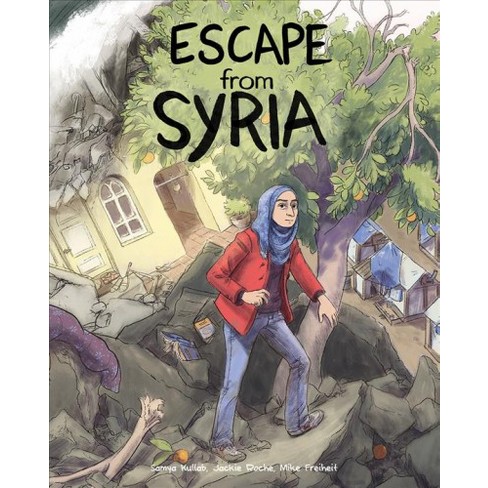
Escape from Syria

Image result for escape from syria

APA Bibliography: Kullab, S., Roche, J., & Freiheit, M. (2017). Escape from Syria. Firefly Books.

Readability Lexile: GN720L

Book Information: https://www.fireflybooks.com/catalogue/children-s-books/product/11566-escape-from-syria

Genre: Historical Fiction, Graphic Novel, Political Fiction, Biographical Fiction

Author Information: https://www.samyakullab.com/

Illustrator Information: http://www.jrocheworkshop.com/3420821-about-contact

Summary: This graphic novel is a fictional story that recalls a real-life struggle. It is told through the perception of Amina. It is about a family that is forced to flee from Syria. Their family home was destroyed by bomb strikes, which makes the family leave their homeland. They go to the refugee camps in Lebanon. When Youseff, the youngest child, falls sick, the family is forced to take a big risk. They eventually settle in the west after some terrible times.

Target Audience: The target audience for this book is children ages 12-17. The author does a great job telling a story of the struggles on Syrians. The illustrator did an amazing job showing the story of Amina and her family.

Evaluation: I think this was really an amazing book. The graphics in the book are absolutely great, and detailed. I love how the illustrator made the pictures as detailed as possible to tell the story of the family and the struggles they faced.

Reader Response Activity: An activity that can be really cool is to have the students come up with a struggle that they have faced. Have your students first write about it and then have them make a comic book. You can set the requirements as hard or as easy as you want based on the age group and ability of your students.

Sunday, November 18, 2018

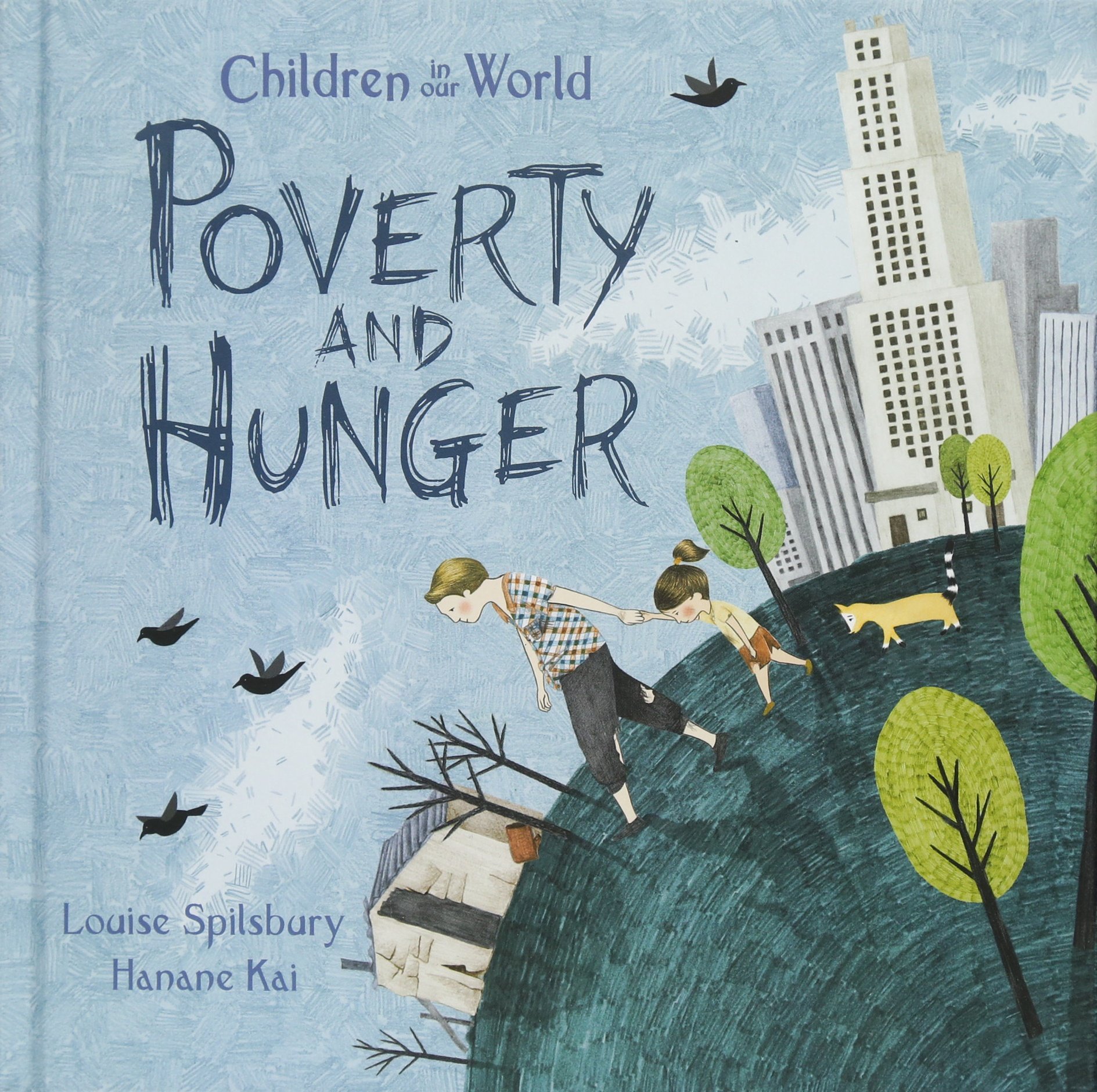
Children in our World: Poverty and Hunger

Image result for poverty and hunger book

APA Bibliography: Spilsbury, L., & Kai, H. (2017). Children in our World: Poverty and Hunger. Hauppauge, NY: Barron's Educational Series.

Book Information: https://www.bookdepository.com/Poverty-Hunger-Louise-Spilsbury/9781438050195

Genre: Nonfiction, Informational Text

Author Information: https://www.hachettechildrens.co.uk/authors/detail.page?id=bnYrqwgGlmiYB1DNf5TS-c-tnWlS5TCJ2Q0JDNRHoox4eha7vc6FnXlCnJEqF00_

Illustrator Information: http://hanane.me/en/index.php?pp_title_en=about+%26+contacts&sp_title_en=About+me

Summary: This book illustrates the problems that people in poverty and homeless people go through. They may not have enough money to buy food, clean water, clothing, medicine, and shelter they need. Approximately three-quarters of all hungry people rely on farming for their food, but they do not have enough money to buy land, tools or seeds to grow food. Other people who are poor are people who have disabilities, which prevent them from working. Natural disasters and wars cause people to become homeless as well. There are many ways that you can help through charities, donations, thrift stores, free school meals, and so on. 

Target Audience: The target audience is children ages 8-10, but I feel like anyone would enjoy this book. It is very informational about poverty and how to help. The author uses simple wording so children of all ages can enjoy the book.

Evaluation: I really enjoyed this book for a variety of reasons. The author has written many books about real world issues all across the world. The book doesn't just show us the problem, but it also provides examples of ways you can help. The messages are very clear in the illustrations and easy to understand. 

Reader Response Activity: There are many activities you can include with this book. First, you can have a discussion with your students about what poverty exactly is and what causes it. Then, you discuss the different ways to help the people living in poverty. You can do things such as, having a can food drive and donating clothes and toys to the local thrift store or Goodwill. 

Saturday, November 17, 2018

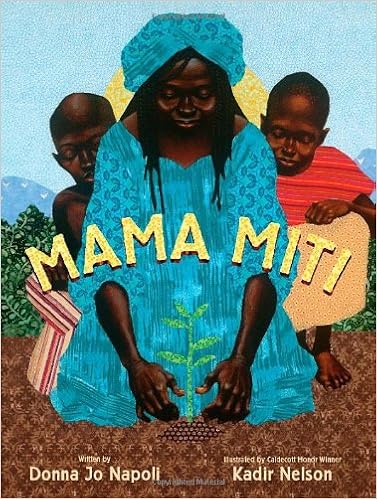
Mama Miti: Wangari Maathi and the Trees of Kenya

Image result for mama miti

APA Bibliography: Napoli, D. J., & Nelson, K. (2010). Mama Miti: Wangari Maathi and the Trees of Kenya New York, NY: Simon & Schuster Books for Young Readers.

Readability Lexile: AD610L

Book Information: http://www.simonandschuster.com/books/Mama-Miti/Donna-Jo-Napoli/9781416935056

Genre: Non-Fiction, Biography, Informational Text, Environmental, Diverse Protagonist, Picture Book

Author Information: http://www.donnajonapoli.com

Illustrator Information: http://www.kadirnelson.com

Summary: This biography is about Wangari Maathi and how she planted trees all over Kenya. She lived in the city, but she never forgot her roots. She has trees planted in her backyard to keep her connected to nature. One day a poor woman came to seek her help, Wangari gave her seeds of the mubiru muiru tree and told her to plant it for food. The woman went home and planted the seeds and ate the tasteful berries the tree gave. Slowly women all across the country came to seek her help, and she told each one to plant different trees. Eventually, the places where there were no more trees, had a countless number of trees. Wangari, who is known as Mama Miti--the mother of trees, changed the country with trees. 

Target Audience: The targeted audience is children ages 4-8. I think that children will really like this book because it is a biography in a picture book. Children would be able to understand the life of Wangari Maathi through the pictures. 

Evaluation: I was really surprised with the book because I had never seen a biography in a picture book. It was truly an interesting and unique book. Its amazing to see how one woman can change the whole country for the better with trees. 

Reader Response Activity: An activity that you can do requires permission from the school. You can have your students plant a tree in the school yard and watch it grow. Then you can have a discussion about how trees provide food, wood, and shelter for animals and people. 

Friday, November 16, 2018

Esperanza Rising

Related image

APA Bibliography: Ryan, P. M. (2000). Esperanza Rising. New York, NY: Scholastic Press.

Readability Lexile: 750L

Book Information: https://www.scholastic.com/teachers/books/esperanza-rising-by-pam-munoz-ryan/

Genre: Historical Fiction, Young Adult, Engages Middle School, Diverse Protagonist, Bilingual

Author Information: http://www.pammunozryan.com

Summary: This amazing book is about a girl named Esperanza, who lives in Mexico. Her family is wealthy and she has the perfect life. She has everything she could wish for. But things take a turn when bandits capture and kill Esperanza's father. Then her father's step-brothers take over the property and try to convince her mother to sell the house. When Mama says no, Papa's step-brothers burn the house down. Mama makes decision to leave for California. Except for Abuelita, everyone goes to California, including the household servants. In California, Esperanza has to learn to work in the fields and take care of her family. The working conditions are definitely not the greatest, but in order to bring Abuelita to California, Esperanza knows she has to work really hard. When Miguel bring Abuelita, everyone was shocked because they thought he had run away with Esperanza's hard earned money. Esperanza gets her hopes up when she sees Abuelita and dreams of learning English and starting a life. 

Target Audience: The target audience for this book is for students in grades 6-8. I think this book is perfect for older children because they are about the same age as Esperanza is in the book and they can relate to her on some level. The concepts that are presented in this book is definitely for mature students because they have to understand what Esperanza and her family went through. It is really an inspirational book. 

Evaluation: This book was absolutely amazing and would recommend 10/10. It really deserves the awards the book has gotten. Readers can not only just read the words, but they can imagine what it must be like. They can visualize everything because the author is very detailed. The book explains to the readers what it is like immigrants in the United States. It talks about the discrimination and harsh living conditions they have to face. 

Reader Response Activity: An activity that you can do with your students is to have them write a letter to Esperanza. Have your students talk about what life for immigrants is like now. Have them go into details of news about immigrants across the nation and how the discrimination is. It is a very open ended letter, and they can talk about what life is like now compared to what it was like back in 1930s. 

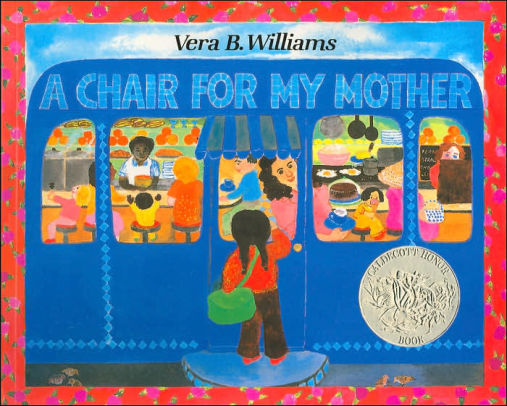
A Chair for My Mother

Image result for a chair for my mother

APA Bibliography: Williams, V. B. (1982). A Chair for My Mother. New York, NY: Greenwillow Books.

Readability Lexile: 530L

Book Information: https://www.harpercollins.com/9780688009144/a-chair-for-my-mother/

Online Read-Aloud: https://www.youtube.com/watch?v=E4Onfbx6v3g

Genre: Juvenile Fiction, Children's Picture Book, Bilingual

Author Information: https://www.harpercollins.com/author/cr-100629/vera-b-williams/

Summary: A Chair for My Mother is about Rosa, her mother, and grandmother. They lost their home due to a fire. They moved to an apartment and their neighbors brought them food and other things for their house, but the one thing they didn't have was a chair. They all started collecting coins from the diner where Rosa's mother worked. When the jar was full, they were able to buy the chair of their dreams. 

Target Audience: The target audience is children ages 4-8 years old. I think children will like this book because the pictures in the books are very detailed and the Vera Williams made sure to draw everything that she had written about. The wording in the book is easy to understand and the children will have an understanding as to what the author is trying to say. 

Evaluation: I really liked this book for a number of reasons. First, it depicted an event that could happen to just about anyone in real life and how that might change everything for the family. Second, the book talked about how important it is to share. Rosa and her family lost everything they had, but their new neighbors gave them whatever to could. Last, but not least, the book talked about how the importance of saving up and every little bit helps. When the whole family works together, you can accomplish anything. 

Reader Response Activity: An activity that you can do with your children is to have a discussion about what would happen if their family had a terrible incident occur, like a fire. You can ask questions like, "How would you work together with your family to get your life together again?" This will get them to think critically about what they would do. You can also talk about their one favorite thing in the house and what they would do if they didn't have it anymore. This story also references Goldilocks from "The Three Bears." You can also take a moment to quickly let your children summarize the short story. 

One Grain of Rice: A Mathematical Folktale

Image result for one grain of rice

APA Bibliography: Demi. (1997). One Grain of Rice: A Mathematical Folktale. New York, NY: Scholastic Press.

Readability Lexile: AD890L

Book Information: https://www.the-best-childrens-books.org/One-Grain-of-Rice.html

Online Read-Aloud: https://www.youtube.com/watch?v=ikZ7rTnvwgA

Genre: Folklore, Diverse Protagonist 

Author Information: http://www.worldwisdom.com/public/authors/Demi.aspx

Summary: This folktale is about a raja in India. He started collecting rice from all of the rice farmers. He reassured them that they will be safe at his palace, and when famine strikes, he will give it to everyone. Every year, the raja sent the rice collectors to collect rice from the farmers. One day, a girl named Rani came up with a plan to trick the raja. She did something good for the raja, so the raja decided to reward her. Rani asks the raja to give her a grain of rice every day that is doubled from the day before for 30 days. On day 1, Rani received one grain of rice, on the second day, she received two grains of rice, and so forth. On the last day, Rani received more than one billion grains of rice. Rani taught the raja to be fair and wise.

Target Audience: The target audience is children in Pre-K to 5th grade. This book is not just a story, it is also a mathematical tale. This book appeals to the younger children with all the colors and different animals. It appeals to the older children with the mathematical work. 

Evaluation: This is a book that is different from the others on my blog. It talks about how rajas used to rule in India. They were very cunning and took a lot from the farmers. Farmers used to live in poverty because they had everything taken away from. This book teaches about another culture, which is why this book is really unique. 

Reader Response Activity: For the younger children you can make a sensory table for the classroom full of colorful rice. Take a big 5lb. of rice and divide it into at least 4 different colors. You can keep the colored rice separated by color, or you can combine them all. Younger children love sensory tables because they can feel and touch everything.
For the older children, I suggest a math activity. This activity will allow the children to think critically and they can understand place values. On the very last page of the book is a table that shows how many grains of rice Rani received each day. You can print off a table like this, but make sure it is blank, so the students can fill it out themselves. Have the students find the grains of rice for each day. It may be easier to count without a calculator for the first 10 days, but the students may need a calculator for the rest.
Both of these activities were adapted from https://teachbesideme.com/one-grain-of-rice-math-activities/.

How Does Poverty Influence Learning?

APA Bibliography:   Parrett, W., & Budge, K. (2016, January 13). How Does Poverty Influence Learning? Retrieved December 16, 2018, ...