Sunday, December 16, 2018

How Does Poverty Influence Learning?

High school students are walking through one school hallway into another through opened double doors. The students are blurred as to imply fast movement and the passing of time.

APA Bibliography: Parrett, W., & Budge, K. (2016, January 13). How Does Poverty Influence Learning? Retrieved December 16, 2018, from https://www.edutopia.org/blog/how-does-poverty-influence-learning-william-parrett-kathleen-budge.

Genre: Nonfiction, Online Material

Author Information: https://www.edutopia.org/profile/william-parrett-and-kathleen-budge

Summary: This article talks about how different factors affect student learning in school. As educators it is important to learn about these factors so we can help these students. These factors include students' health and well-being; literacy and language development; access to physical and material resources; and level of mobility.

Target Audience: The target audience for this article are adolescents, parents, and educators.  

Evaluation: This article provides lots of information for everyone. It talks about how the different factors affect students, their learning, and their academic achievements, and how we can help them. 


Still a Family: A Story About Homelessness

Image result for still a family a story about homelessness summary

APA Bibliography: Sturgis, B. R., & Lee, J. (2017). Still a family. Chicago, IL: Albert Whitman & Company.

Book Information: https://www.goodreads.com/book/show/30201539-still-a-family

Genre: Fiction, Children's Literature

Author Information: https://www.albertwhitman.com/author/brenda-reeves-sturgis/

Illustrator Information: https://joshinlee.com

Summary: This picture book is about a mom, a dad, a daughter, and Molly, the doll. This family lost their home and are living in shelters, but the dad has to live in a separate shelter from the mom and daughter. Even though they are separated, they still find time to spend together at the park. Even through the troubled times, they are still a family. 

Target Audience: The target audience for this book is children ages 4-8. This book is appropriate for them because it has minimal words and lots of pictures. 

Evaluation: I think this book is great for younger children because it shows what it is like to be homeless and living in shelters. Even though the family is separated they still see each other everyday. Through the simplicity of the book, the message is depicted very clearly. 

Reader Response Activity: In the book, the little girl has drawn a picture of what her room looked like. Since this book is for younger children, this activity would be fun for them. Have your students draw a picture of what their room looks like. 

The Family Under the Bridge

Image result for the family under the bridge

APA Bibliography: Carlson, N. S., & Williams, G. (1989). The Family Under the Bridge. New York, NY: Harper Collins.

Readability Lexile: 820L

Book Information: https://www.scholastic.com/teachers/books/family-under-the-bridge-the-by-natalie-savage-carlson/

Genre: Historical Fiction

Author Information: https://www.goodreads.com/author/show/199200.Natalie_Savage_Carlson

Illustrator Information: https://www.harpercollins.com/author/cr-100402/garth-williams/

Summary: This story is about a homeless man named Armand, who lives under a bridge. He walks around pushing his belongings and a black dress shoe. One day he finds three children living under his bridge and he becomes upset. The mother of the children had to find some place to stay as they could not afford to pay the rent anymore. Armand goes to find food and is even more upset when the children decide to follow him, but he grows concerned that they must be hungry. So he allows them to come with him to the shopping mall, where his friend works at Father Christmas. To cheer the children up, Armand says to g caroling. As people are passing, they stop by to give coins, which Armand and the children use to buy food. When they get back to the bridge, the mother is upset to find out that Armand had taken the children out like that. Armand finds a place for the little family to stay with the gypsies for a little bit, until the police find out their location. Armand then decided to find a job to support the family. The mother and one for the children make Armand presentable and finds a job, that has a place to live for the whole family. 

Target Audience: The target audience for this book is children in grades 3-5. This book is great about teaching poverty and homeless. It is an early chapter book so it is easy to understand and is not too long of a book. 

Evaluation: I liked this classic story of homelessness and the struggle of people who have no where to go. They live wherever they can find a place. They make the best of everything even when they have very little. The book shows about love in unlikely places.

Reader Response Activity: An activity you can do with this book is to have the students research shelters in your area. You can make this as easy as possible since it is elementary school. 

The Hundred Dresses

Image result for the hundred dresses

APA Bibliography: Estes, E., & Slobodkin, L. (1972). The Hundred Dresses. New York, NY: Houghton Muffin Harcourt.

Readability Lexile: 870L

Book Information: https://www.scholastic.com/teachers/books/the-hundred-dresses-by-eleanor-estes/

Genre: Fiction

Author Information: https://www.goodreads.com/author/show/23821.Eleanor_Estes

Illustrator Information: https://www.goodreads.com/author/show/169833.Louis_Slobodkin

Summary: This classic story is about a girl named Wanda who moved from Poland to Connecticut with her father and brother. She lives in a poor neighborhood and wears the same faded blue dress to school everyday. She tells the other girls at school that she has a hundred beautiful dresses, but the other girls start making fun of her. Maddie, one of the popular girls, wants to speak up because she knows what it is like to live in poverty, but she doesn't. She thinks if she says something, she will be made fun of too. When it comes time for the annual drawing contest, everyone is surprised to find out  that Wanda turned in a hundred pictures. But Wanda wasn't there to collect the prize. When Wanda's father sends a letter to Wanda's teacher, everyone feels sorry for bullying Wanda. Maddie feels even worse to find out that she has moved away because of her. She vows to never stand by when someone is getting bullied again. 

Target Audience: The target audience for this book is children in grades 3-5. This book is appropriate for them because it relates to them. The children in the book are the same age as the target audience of this book. 

Evaluation: I think this book is great when it comes to teaching children about poverty and bullying. It is a classic story that everyone loves because of the message it sends. It shows children what it feels like to get bullied because of your living condition and you can't control it. 

Reader Response Activity: An activity you can do with this book is to have a drawing contest in your classroom just like the book did. Have the girls draw dresses and have the boys draw a motorboat. Select one boy and one girl as winners. This activity is really fun and allows the students to be creative. 


Sunday, December 9, 2018

"By the Numbers: Childhood Poverty in the US"


APA Bibliography: Breslow, J. M. (2012, November 20). By the Numbers: Childhood Poverty in the U.S. Retrieved December 9, 2018, from https://www.pbs.org/wgbh/frontline/article/by-the-numbers-childhood-poverty-in-the-u-s/.

Genre: Online Material, Nonfiction, Informational Text

Author Information: https://www.pbs.org/wgbh/frontline/person/jason-m-breslow/.

Summary: This article tells the readers about the exact statistics of poverty. "The federal poverty guideline for a family of four is $23,050...More than 16 million children, or roughly one in five, were living in poverty in 2011, according to the U.S. Census Bureau's official poverty measure." The author has direct links of the statistics embedded in each section if the reader wants more details on it.

Target Audience: I would say that the target audience is anyone in high school or older. You have to be a little older to under what exactly the stats are saying. The article also uses some sophisticated wording.

Evaluation: I actually really found this article very helpful. I was able to find out what exactly the statistics of poverty are in the US. It gives you an insight on how the US is now faring as great as we had thought in terms on beating poverty.

Reader Response Activity: You can have your students get into eight groups, one for each section of the article. Then have each group do more research about their section and present it to the rest of the class. This will give the students an insight on how it is like to be living in poverty. 

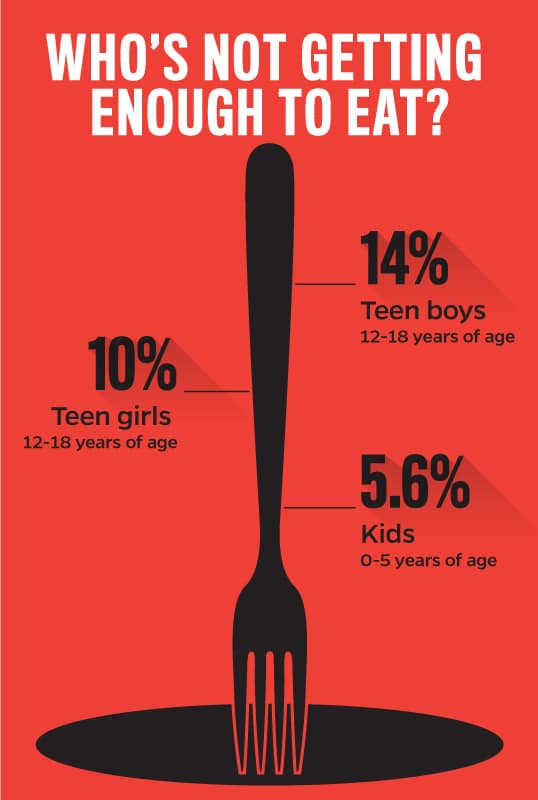
"U.S. Teens In Poverty Go Hungry So Siblings Can Eat"

infographic

APA Bibliography: Rosen, J., & Johns Hopkins. (2017, February 15). U.S. TEENS IN POVERTY GO HUNGRY SO SIBLINGS CAN EAT. Retrieved December 9, 2018, from https://www.futurity.org/food-poverty-hunger-families-1358482-2/.

Genre: Online Material, Nonfiction

Author Information: https://www.linkedin.com/in/jill-rosen-b372025
https://www.jhu.edu

Summary: This articles summarized a study done by Robert Moffitt and David C. Ribar at Johns Hopkins University. They found that in a family that had income levels well below the poverty line, teens went hungry so their younger siblings could have food to eat. Parents of those families would sacrifice themselves first when it came to food. But if there wasn't enough food for all their children, they would give food to the babies and toddlers before giving it to the teenagers. Amongst the teenagers, teen boys usually went without food more than teen girls.

Target Audience: The target audience for this article is anyone older than 15.

Evaluation: This article was very hard core and very realistic. This happens a lot in poverty, but there isn't much we can do about it. Sometimes it can be very hard for parents to make this decision, but they do not have a choice.

Reader Response Activity: An activity that you can do with this article is to have your students do some research on poverty. This activity is very open ended and you can manipulate it however you want. You can specifically have them focus on just poverty, or how it affects children, or how teens have to work instead of going to school. 

Saturday, December 8, 2018

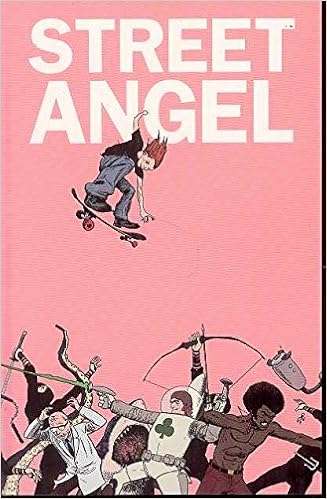
Street Angel

Image result for street angel the princess of poverty volume 1

APA Bibliography: Rugg, J., & Maruca, B. (2005). Street Angel. San Jose, CA: SLG Publishing.

Book Information: https://www.goodreads.com/book/show/893511.Street_Angel

Genre: Graphic Novel, Fiction, Young Adult

Author Information: https://www.jimrugg.com

Summary: Jesse "Street Angel" Sanchez has been on the streets for 13 years. She knows how to take care of herself and she's not exactly the cleanest young girl, but she has mad skateboarding skills and ninja fighting skills. There are five books in the series, which talk about Aztec gods, astronauts, Satanists, and much more. She shows that just because you are poor and living on the streets, it doesn't mean you can't have an imagination.

Target Audience: The target audience for this book is your adults in grades 10-12. This is not recommended for anyone younger because of the language and images in the book.

Evaluation: This book was definitely interesting. I have never read anything like this before. It has lots of humor, comics, and uses a great deal of imagination.

Reader Response Activity: An activity that you can do with this book is to have your students come up a crazy character/creature for Street Angel to fight. This activity allows you students to use lots of creativity. Also, have your students give those characters certain attributes that make the character strong or witty or whatever they want. 

Yummy: The Last Days of a Southside Shorty

Image result for yummy book


APA Bibliography: Neri, G., & DuBurke, R. (2010). Yummy: The Last Days of a Southside Shorty. New York, NY: Lee and Low Books.

Readability Lexile: GN510L

Book Information: https://www.leeandlow.com/books/yummy

Genre: Graphic Novel, Criminal Justice, Teen Years

Author Information: https://www.gregneri.com/aboutme/

Illustrator Information: http://www.randyduburke.com

Summary: Yummy is story based on a true story about a kid who grew up in Chicago and became involved with gangs. Yummy was a nickname for Robert Sandifers, who was 11 years old. He would eat lots of sweets, which is how he ended up with the nickname. He lived with his grandmother, but he though his real family was the gang in the streets. He would do whatever they told him. One day one of the gang members gave Yummy a gun. He accidentally shot an innocent 14 year old girl. The police investigated the shooting of the girl, and ended up finding Yummy shot dead under a bridge.

Target Audience: The target audience for this book is children in grades 4-5. I would not recommend this book for anyone younger because of the gang scenery and violence.

Evaluation: I though this book was really interesting. I like that it was based on a true story. The author did lots of research before writing this book, including going to Chicago to the same neighborhoods. The story in the book is something that happens a lot in Chicago, but it is never talked about. Using this book in a classroom, or just reading it for fun provides lots of insight as to why living in Chicago is like.

Reader Response Activity: An activity that you can do is to show documentaries about what it is like to be living in the south side of Chicago. This will show the children how it was like for Yummy.

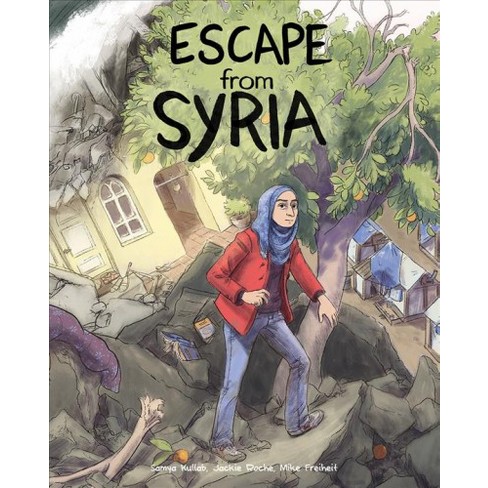
Escape from Syria

Image result for escape from syria

APA Bibliography: Kullab, S., Roche, J., & Freiheit, M. (2017). Escape from Syria. Firefly Books.

Readability Lexile: GN720L

Book Information: https://www.fireflybooks.com/catalogue/children-s-books/product/11566-escape-from-syria

Genre: Historical Fiction, Graphic Novel, Political Fiction, Biographical Fiction

Author Information: https://www.samyakullab.com/

Illustrator Information: http://www.jrocheworkshop.com/3420821-about-contact

Summary: This graphic novel is a fictional story that recalls a real-life struggle. It is told through the perception of Amina. It is about a family that is forced to flee from Syria. Their family home was destroyed by bomb strikes, which makes the family leave their homeland. They go to the refugee camps in Lebanon. When Youseff, the youngest child, falls sick, the family is forced to take a big risk. They eventually settle in the west after some terrible times.

Target Audience: The target audience for this book is children ages 12-17. The author does a great job telling a story of the struggles on Syrians. The illustrator did an amazing job showing the story of Amina and her family.

Evaluation: I think this was really an amazing book. The graphics in the book are absolutely great, and detailed. I love how the illustrator made the pictures as detailed as possible to tell the story of the family and the struggles they faced.

Reader Response Activity: An activity that can be really cool is to have the students come up with a struggle that they have faced. Have your students first write about it and then have them make a comic book. You can set the requirements as hard or as easy as you want based on the age group and ability of your students.

Sunday, November 18, 2018

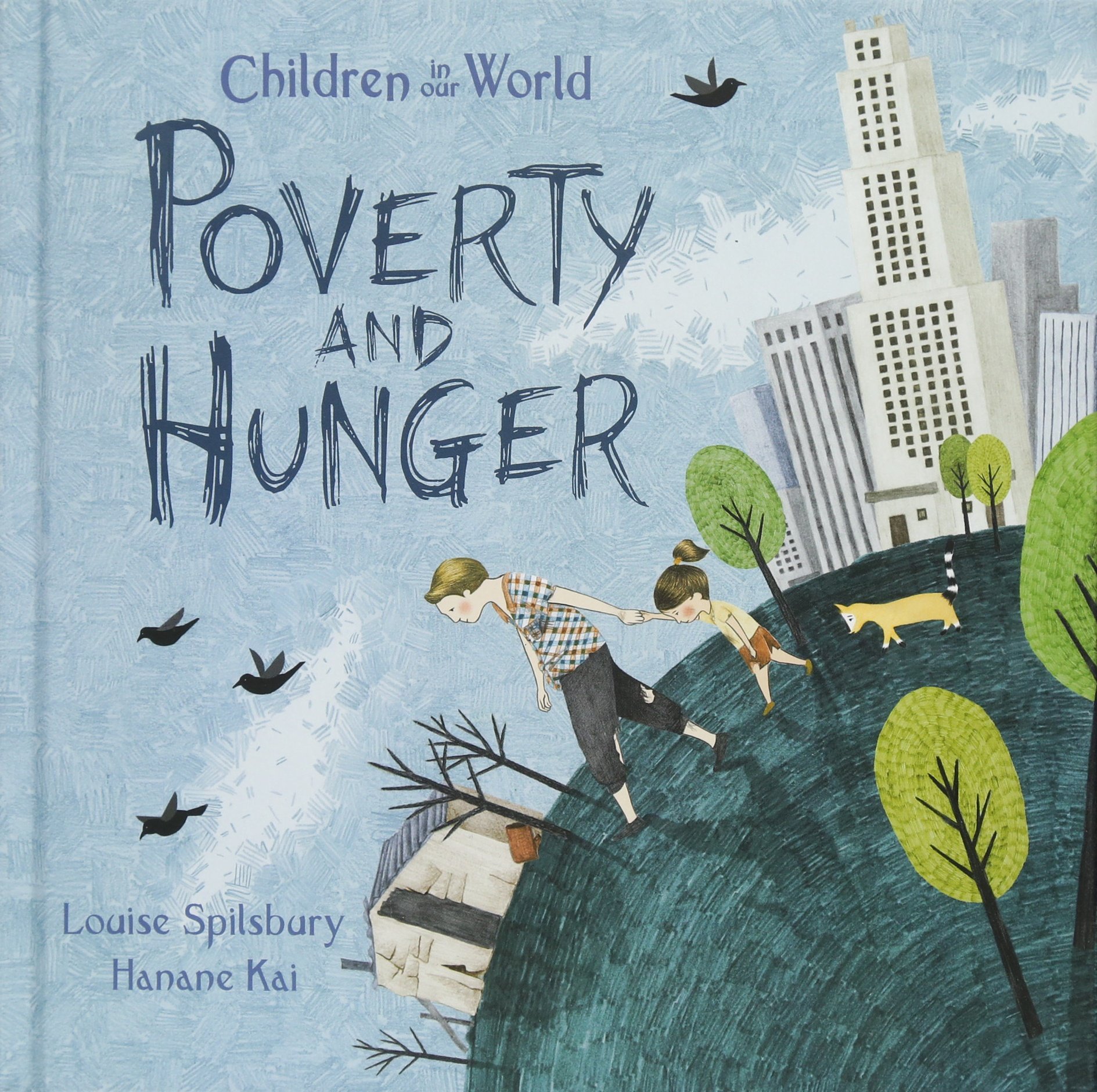
Children in our World: Poverty and Hunger

Image result for poverty and hunger book

APA Bibliography: Spilsbury, L., & Kai, H. (2017). Children in our World: Poverty and Hunger. Hauppauge, NY: Barron's Educational Series.

Book Information: https://www.bookdepository.com/Poverty-Hunger-Louise-Spilsbury/9781438050195

Genre: Nonfiction, Informational Text

Author Information: https://www.hachettechildrens.co.uk/authors/detail.page?id=bnYrqwgGlmiYB1DNf5TS-c-tnWlS5TCJ2Q0JDNRHoox4eha7vc6FnXlCnJEqF00_

Illustrator Information: http://hanane.me/en/index.php?pp_title_en=about+%26+contacts&sp_title_en=About+me

Summary: This book illustrates the problems that people in poverty and homeless people go through. They may not have enough money to buy food, clean water, clothing, medicine, and shelter they need. Approximately three-quarters of all hungry people rely on farming for their food, but they do not have enough money to buy land, tools or seeds to grow food. Other people who are poor are people who have disabilities, which prevent them from working. Natural disasters and wars cause people to become homeless as well. There are many ways that you can help through charities, donations, thrift stores, free school meals, and so on. 

Target Audience: The target audience is children ages 8-10, but I feel like anyone would enjoy this book. It is very informational about poverty and how to help. The author uses simple wording so children of all ages can enjoy the book.

Evaluation: I really enjoyed this book for a variety of reasons. The author has written many books about real world issues all across the world. The book doesn't just show us the problem, but it also provides examples of ways you can help. The messages are very clear in the illustrations and easy to understand. 

Reader Response Activity: There are many activities you can include with this book. First, you can have a discussion with your students about what poverty exactly is and what causes it. Then, you discuss the different ways to help the people living in poverty. You can do things such as, having a can food drive and donating clothes and toys to the local thrift store or Goodwill. 

Saturday, November 17, 2018

Mama Miti: Wangari Maathi and the Trees of Kenya

Image result for mama miti

APA Bibliography: Napoli, D. J., & Nelson, K. (2010). Mama Miti: Wangari Maathi and the Trees of Kenya New York, NY: Simon & Schuster Books for Young Readers.

Readability Lexile: AD610L

Book Information: http://www.simonandschuster.com/books/Mama-Miti/Donna-Jo-Napoli/9781416935056

Genre: Non-Fiction, Biography, Informational Text, Environmental, Diverse Protagonist, Picture Book

Author Information: http://www.donnajonapoli.com

Illustrator Information: http://www.kadirnelson.com

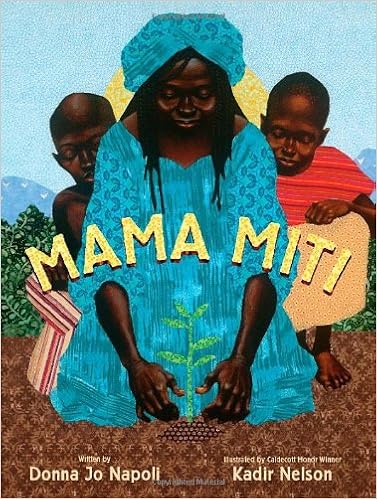
Summary: This biography is about Wangari Maathi and how she planted trees all over Kenya. She lived in the city, but she never forgot her roots. She has trees planted in her backyard to keep her connected to nature. One day a poor woman came to seek her help, Wangari gave her seeds of the mubiru muiru tree and told her to plant it for food. The woman went home and planted the seeds and ate the tasteful berries the tree gave. Slowly women all across the country came to seek her help, and she told each one to plant different trees. Eventually, the places where there were no more trees, had a countless number of trees. Wangari, who is known as Mama Miti--the mother of trees, changed the country with trees. 

Target Audience: The targeted audience is children ages 4-8. I think that children will really like this book because it is a biography in a picture book. Children would be able to understand the life of Wangari Maathi through the pictures. 

Evaluation: I was really surprised with the book because I had never seen a biography in a picture book. It was truly an interesting and unique book. Its amazing to see how one woman can change the whole country for the better with trees. 

Reader Response Activity: An activity that you can do requires permission from the school. You can have your students plant a tree in the school yard and watch it grow. Then you can have a discussion about how trees provide food, wood, and shelter for animals and people. 

Friday, November 16, 2018

Esperanza Rising

Related image

APA Bibliography: Ryan, P. M. (2000). Esperanza Rising. New York, NY: Scholastic Press.

Readability Lexile: 750L

Book Information: https://www.scholastic.com/teachers/books/esperanza-rising-by-pam-munoz-ryan/

Genre: Historical Fiction, Young Adult, Engages Middle School, Diverse Protagonist, Bilingual

Author Information: http://www.pammunozryan.com

Summary: This amazing book is about a girl named Esperanza, who lives in Mexico. Her family is wealthy and she has the perfect life. She has everything she could wish for. But things take a turn when bandits capture and kill Esperanza's father. Then her father's step-brothers take over the property and try to convince her mother to sell the house. When Mama says no, Papa's step-brothers burn the house down. Mama makes decision to leave for California. Except for Abuelita, everyone goes to California, including the household servants. In California, Esperanza has to learn to work in the fields and take care of her family. The working conditions are definitely not the greatest, but in order to bring Abuelita to California, Esperanza knows she has to work really hard. When Miguel bring Abuelita, everyone was shocked because they thought he had run away with Esperanza's hard earned money. Esperanza gets her hopes up when she sees Abuelita and dreams of learning English and starting a life. 

Target Audience: The target audience for this book is for students in grades 6-8. I think this book is perfect for older children because they are about the same age as Esperanza is in the book and they can relate to her on some level. The concepts that are presented in this book is definitely for mature students because they have to understand what Esperanza and her family went through. It is really an inspirational book. 

Evaluation: This book was absolutely amazing and would recommend 10/10. It really deserves the awards the book has gotten. Readers can not only just read the words, but they can imagine what it must be like. They can visualize everything because the author is very detailed. The book explains to the readers what it is like immigrants in the United States. It talks about the discrimination and harsh living conditions they have to face. 

Reader Response Activity: An activity that you can do with your students is to have them write a letter to Esperanza. Have your students talk about what life for immigrants is like now. Have them go into details of news about immigrants across the nation and how the discrimination is. It is a very open ended letter, and they can talk about what life is like now compared to what it was like back in 1930s. 

A Chair for My Mother

Image result for a chair for my mother

APA Bibliography: Williams, V. B. (1982). A Chair for My Mother. New York, NY: Greenwillow Books.

Readability Lexile: 530L

Book Information: https://www.harpercollins.com/9780688009144/a-chair-for-my-mother/

Online Read-Aloud: https://www.youtube.com/watch?v=E4Onfbx6v3g

Genre: Juvenile Fiction, Children's Picture Book, Bilingual

Author Information: https://www.harpercollins.com/author/cr-100629/vera-b-williams/

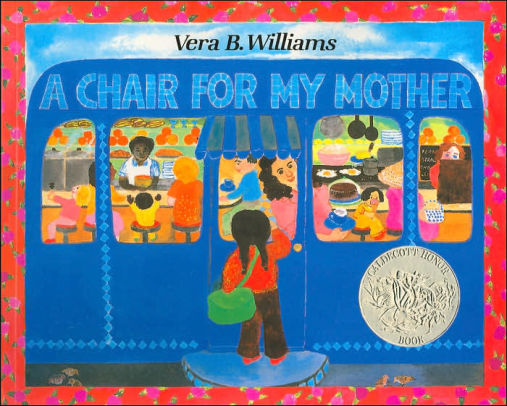
Summary: A Chair for My Mother is about Rosa, her mother, and grandmother. They lost their home due to a fire. They moved to an apartment and their neighbors brought them food and other things for their house, but the one thing they didn't have was a chair. They all started collecting coins from the diner where Rosa's mother worked. When the jar was full, they were able to buy the chair of their dreams. 

Target Audience: The target audience is children ages 4-8 years old. I think children will like this book because the pictures in the books are very detailed and the Vera Williams made sure to draw everything that she had written about. The wording in the book is easy to understand and the children will have an understanding as to what the author is trying to say. 

Evaluation: I really liked this book for a number of reasons. First, it depicted an event that could happen to just about anyone in real life and how that might change everything for the family. Second, the book talked about how important it is to share. Rosa and her family lost everything they had, but their new neighbors gave them whatever to could. Last, but not least, the book talked about how the importance of saving up and every little bit helps. When the whole family works together, you can accomplish anything. 

Reader Response Activity: An activity that you can do with your children is to have a discussion about what would happen if their family had a terrible incident occur, like a fire. You can ask questions like, "How would you work together with your family to get your life together again?" This will get them to think critically about what they would do. You can also talk about their one favorite thing in the house and what they would do if they didn't have it anymore. This story also references Goldilocks from "The Three Bears." You can also take a moment to quickly let your children summarize the short story. 

One Grain of Rice: A Mathematical Folktale

Image result for one grain of rice

APA Bibliography: Demi. (1997). One Grain of Rice: A Mathematical Folktale. New York, NY: Scholastic Press.

Readability Lexile: AD890L

Book Information: https://www.the-best-childrens-books.org/One-Grain-of-Rice.html

Online Read-Aloud: https://www.youtube.com/watch?v=ikZ7rTnvwgA

Genre: Folklore, Diverse Protagonist 

Author Information: http://www.worldwisdom.com/public/authors/Demi.aspx

Summary: This folktale is about a raja in India. He started collecting rice from all of the rice farmers. He reassured them that they will be safe at his palace, and when famine strikes, he will give it to everyone. Every year, the raja sent the rice collectors to collect rice from the farmers. One day, a girl named Rani came up with a plan to trick the raja. She did something good for the raja, so the raja decided to reward her. Rani asks the raja to give her a grain of rice every day that is doubled from the day before for 30 days. On day 1, Rani received one grain of rice, on the second day, she received two grains of rice, and so forth. On the last day, Rani received more than one billion grains of rice. Rani taught the raja to be fair and wise.

Target Audience: The target audience is children in Pre-K to 5th grade. This book is not just a story, it is also a mathematical tale. This book appeals to the younger children with all the colors and different animals. It appeals to the older children with the mathematical work. 

Evaluation: This is a book that is different from the others on my blog. It talks about how rajas used to rule in India. They were very cunning and took a lot from the farmers. Farmers used to live in poverty because they had everything taken away from. This book teaches about another culture, which is why this book is really unique. 

Reader Response Activity: For the younger children you can make a sensory table for the classroom full of colorful rice. Take a big 5lb. of rice and divide it into at least 4 different colors. You can keep the colored rice separated by color, or you can combine them all. Younger children love sensory tables because they can feel and touch everything.
For the older children, I suggest a math activity. This activity will allow the children to think critically and they can understand place values. On the very last page of the book is a table that shows how many grains of rice Rani received each day. You can print off a table like this, but make sure it is blank, so the students can fill it out themselves. Have the students find the grains of rice for each day. It may be easier to count without a calculator for the first 10 days, but the students may need a calculator for the rest.
Both of these activities were adapted from https://teachbesideme.com/one-grain-of-rice-math-activities/.

Sunday, November 4, 2018

Yard Sale

Image result for yard sale book

APA Bibliography: Bunting, E., & Castilla, L. (2015). Yard Sale. Somerville, MA: Candlewick Press.

Book Information: https://www.goodreads.com/book/show/22747809-yard-sale

Online Rad-Aloud: https://www.youtube.com/watch?v=y8PoXkYZy8g

Genre: Children's Picture Book, Realistic Fiction

Author Information: https://www.kidsreads.com/authors/eve-bunting.

Illustrator Information: http://www.laurencastillo.com.

Summary: Yard Sale is about Callie and her family who are selling almost all of their stuff because they are moving from a house to an apartment. Callie is upset that they have to sell their stuff, but her parents explain that they do not have room for all that stuff. Callie eventually realizes that its okay that they are going through this because its having each other that matters most.

Target Audience: The target audience for this book is children ages 3-7. This book is a pretty easy read and the concept is clear for younger children.

Evaluation: I think this is a good book to teach children about poverty. By showing children that moving into an apartment because of money problems is common. Going through financial issues is something that many families go through everyday. The images on each page were very detailed and showed a lot of emotion.

Reader Response Activity: Since this book is for younger children, an activity you can do is to have the children talk about any moving stories they may have. After you do this you can print off a coloring page of a yard sale and have the children color it. This works on improving their fine motor skills and coloring between the lines.

Saturday, November 3, 2018

Chandra's Magic Light: A Story in Nepal

Image result for chandras magic light

APA Bibliography: Heine, T., & Gueyfier, J. (2014). Chandra's Magic Light: A Story in Nepal. Cambridge, MA: Barefoot Books.

Readability Lexile: 620L

Book Information: http://store.barefootbooks.com/chandra-s-magic-light-4426.html.

Online Read-Aloud: https://www.youtube.com/watch?v=Fz5656g8sfw

Genre: Fiction, Diverse Protagonist, Bilingual

Author Information: https://www.jacketflap.com/profile.asp?member=Moley

Summary: This book is very interesting. It is about this poor family in Nepal. Chandra and Deena are sisters who went to the market to get things for the house and their brother, Akash, who is ill. At the market they meet this man selling solar lamps. The run to tell their father about it, but he tells them that they don't have enough money to buy it. Chandra and Deena decide to sell wild flowers at the market and make money to buy the lamp. As the man runs out of lamps to sell, Chandra begs the man to give them the piece he uses to show the people. He agrees and gives them the solar lamp. Chandra thanks the gods of the moon and sun for the lamp.

Target Audience: The targeted audience is for children in grades PK - 2nd grade. This book is very colorful, so the younger children will enjoy it. They will enjoy seeing all the different colors on each page. This book is of a different culture so children will get to see the differences between their culture and Chandra's culture.

Evaluation: This book is a great book for younger children because of how colorful it is.  It teaches children about how many families may not have a lot of money for treatments for health problems. It teaches children about working for what you need. This book also teaches about the Nepalese culture. In the back of the book is information about how life is like in Nepal and there is also a map of Nepal.

Reader Response Activity: In the back of the book is an activity of how to make a pizza box solar oven. You can do this activity with your children. They will have fun making this activity because it really relates to the book. There are directions and a list of what you need for the activity as well, so it is easy to follow along.

The Absolutely True Diary of a Part-Time Indian

Image result for the absolutely true diary of a part-time indian

APA Bibliography: Alexie, S. (2007). The Absolutely True Diary of a Part-Time Indian. New York, NY: Hachette Book Group.

Readability Lexile: 600L

Book Information: https://www.goodreads.com/book/show/693208.The_Absolutely_True_Diary_of_a_Part_Time_Indian.

Genre: Realistic Fiction, Engages Middle School, Diverse Protagonist

Author Information: http://fallsapart.com

Summary: Junior is from a poor Indian family living on the Spokane reservation. He has a lot of health problems and only one best friend. Junior was having a tough time on the reservation because everyone picked on him. He had dreams to be bigger and hated that the books were so old that his mother used the same book. With encouragement from Mr. P and his grandma, Junior decided to change schools to the nearby school, Reardan. His dad would drive him to school and pick him up when they had gas money, but if they didn't then he would have to walk 22 miles home or hitchhike. Everyone but his family started calling him a traitor for going to a white school. Junior found friends in people he didn't think would be his friends. He started playing basketball on the varsity team. He went up against his best friend at the school's basketball game and won. This book is about love, tragedy, friendship, family, and humor.

Target Audience: I would recommend this book for children ages 13 and older. There are some curse words in the book that I wouldn't recommend for anyone younger than that. This book has some scenes which would be inappropriate for anyone younger than 13. There are concepts such as bullying, maturity, and other concepts that would be understood by older children.

Evaluation: I think this a book that all middle schoolers or high schoolers should read. It is an absolutely amazing book. It talks about all the problems that children face who are from different cultures and poverty.

Reader Response Activity: Junior loves to draw comics and this book has comics throughout the book. Since this would be a book read in middle school, for an activity you can have your students make a comic. You can put whatever requirements you would like. Students will have fun with this because it can be as open-ended as they would like.

Mama Panya's Pancakes

Image result for mama panya's pancakes

APA Bibliography: Chamberlin, M., & Chamberlin, R. (2005). Mama Panya's Pancakes: A Village Take from Kenya. Cambridge, MA: Barefoot Books.

Readability Lexile: AD600L

Book Information: https://www.scholastic.com/teachers/books/mama-panya-s-pancakes-by-mary-chamberlin/.

Online Read-Aloud: https://www.youtube.com/watch?v=No6QgFpY_lY

Genre: Fiction, Diverse Protagonist

Author Information: https://marychamberlainbooks.com.

Illustrator Information: https://juliacairns.net

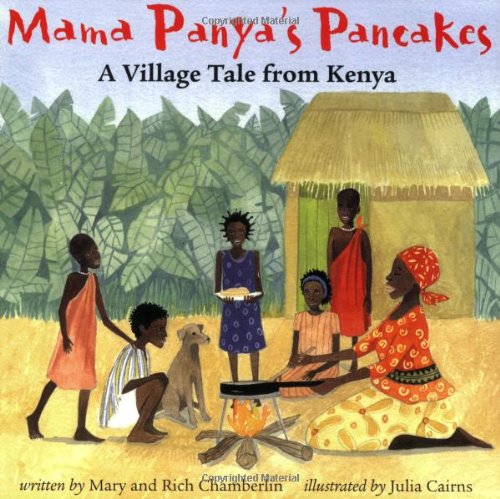
Summary: This book is about Mama Panya and Adika. Mama panda decides to surprise Adika by making her famous pancakes, but Adika figures out that she will be making the pancakes. As they are going to the market to get just enough ingredients with the little money that Mama Panya has, they meet their friends. Before Mama Panya can stop Adika, he invites them over for pancakes. Mama worries that they don't enough money to buy the ingredients, but Adika always says, "You'll have a little bit and a little bit more." When everyone comes to eat pancakes, Mama Panya is surprised to see what everyone brought with them. They all brought more ingredients!

Target Audience: The target audience is children ages 4 - 10 years old. I think children will like this book because they get to explore the Kenyan lifestyle. Each page has different animals and trees. The book also had Kenyan words which they can try to pronounce. There is also a recipe in the back of the book.

Evaluation: I liked this book because it is different from the other books. It depicts a different culture which I think is really cool. I think children will like this book because it is interesting.

Reader Response Activity: The activity that goes along with this book is the recipe. You can make Mama Panya's pancakes at home with the recipe provided. You are not only experiencing a different culture, but you get to taste it as well.

Friday, November 2, 2018

The Land of Forgotten Girls

Image result for the land of forgotten girls

APA Bibliography: Kelly, E. E. (2016). The Land of Forgotten Girls. New York, NY: Greenwillow Books.

Readability Lexile: 640L

Book Information: https://www.harpercollins.com/9780062238641/the-land-of-forgotten-girls/.

Genre: Realistic Fiction, Diverse Protagonist, Engages Middle Schoolers

Author Information: http://www.erinentradakelly.com

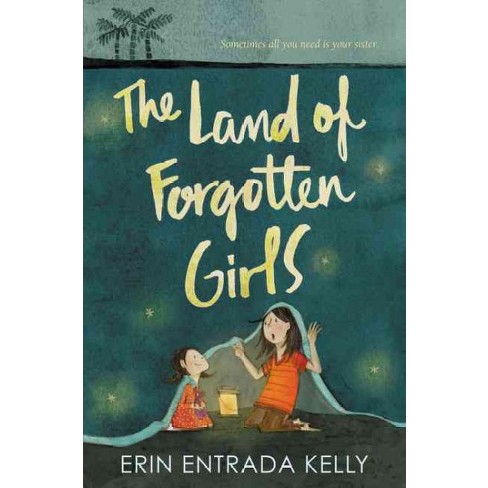
Summary: The Land of Forgotten Girls is about two sisters, Soledad and Ming, who move to the US from the Philippines with their dad and step-mother,Vea, after their mom passed away. After they get settled into a small two-bedroom apartment, Sol's dad goes back to the Philippines and never comes back. Sol does everything to protect Ming from Vea, who abuses them. Sol has one best friend, Manny. They talk about everything from being poor to kissing to stealing bomb pops from the grocery store. After one bad incident of pinecone throwing, Sol finds another friend in Caroline, who from a completely different lifestyle. To keep Ming's hopes up, Sol tells her fairytales. One such fairytale is about Aunt Jovie. Ming gets so caught up in it the she starts believing Aunt Jovie is real. When she finds out she isn't, Ming is completely shattered and Sol tells her about the land of forgotten girls. Sol trades a plant for a row boat with Blackbeard for Ming to take to the imaginary land of forgotten girls.

Target Audience: The target audience for this book is children ages 10 and older. This book has some words and phrases which would not be recommended for children younger than 10. It talks about some important concepts and themes which would not be comprehendible for children younger than 10. 

Evaluation: I think this is a great book overall. I definitely enjoyed reading this book and would recommend 10/10. It has some important themes such as family, friendship, and poverty. When you don't have much in your life, you go to your happy place, which may be imaginary. It gives you hope to live on and continue. This was Sol's and Ming's life. They didn't have enough money to have a happy living, but they lived through their friends and each other. This is what the author wants the readers to know. Even if you are having a tough time, look at the good things you have. 

Reader Response Activity: An activity you can do with your students is that you can have them write a story about what their happy place is when they are having a bad day. Have them explain why they chose that place and what the significance is. This activity will keep them engaged because it relates to them personally. 


Saturday, October 13, 2018

A Shelter in Our Car

Image result for a shelter in our car

APA Bibliography: Gunning, M., & Pedlar, E. (2004). A Shelter in Our Car. San Francisco: Children's Book Press.

Readability Lexile: AD560L

Book Information: https://www.leeandlow.com/books/a-shelter-in-our-car

Online Read Aloud: https://www.youtube.com/watch?v=6k9c8hVoDqY

Genre: Realistic Fiction, Diverse Protagonist, Bilingual

Author Information: https://www.boydsmillspress.com/bmp/authors-illustrators/monica-gunning

Summary: Zettie and her family came to America from Jamaica. After Zettie's dad passed away, Zettie and her mom were all alone. They couldn't afford a place to live, so they lived in their car. While Zettie goes to school, Zettie's mom would try to find work wherever it was available and finish her classes at the community college. Zettie would get embarrassed by the car so she would have her mom drop her off behind the school. Zettie sometimes gets bullied by the kids at school. When Zettie's mom finally finds a job with the Health Fair, they sleep in a real bed in a motel. This brings hope for Zettie and her mom. 

Target Audience: The target audience for this book is children in grades K- 3rd grade. I think children will like this book because it gives hope for children living in poverty. It is a easy read and children will be able to understand it easily. 

Evaluation: Being homeless is terrible, but it is a reality that some people have to face. They do not know if they will have food to eat at night or they might even have very little to eat. Coming from a well off life to a life of working very hard can be very rough. 

Reader Response Activity: An activity you can do is to have a discussion about what it would be like to live in a car. Have your students make a list of things they would keep in the car if they lived in a car. Remind them that they can only take the necessities. Ask questions about where they would eat, where they would spend the night, etc. When you finish that discussion, talk to your students about what they can do as a class to help children who are homeless. You can help them come up with ideas such as having a food pantry in the school or researching where the near by shelters are. 

How Does Poverty Influence Learning?

APA Bibliography:   Parrett, W., & Budge, K. (2016, January 13). How Does Poverty Influence Learning? Retrieved December 16, 2018, ...